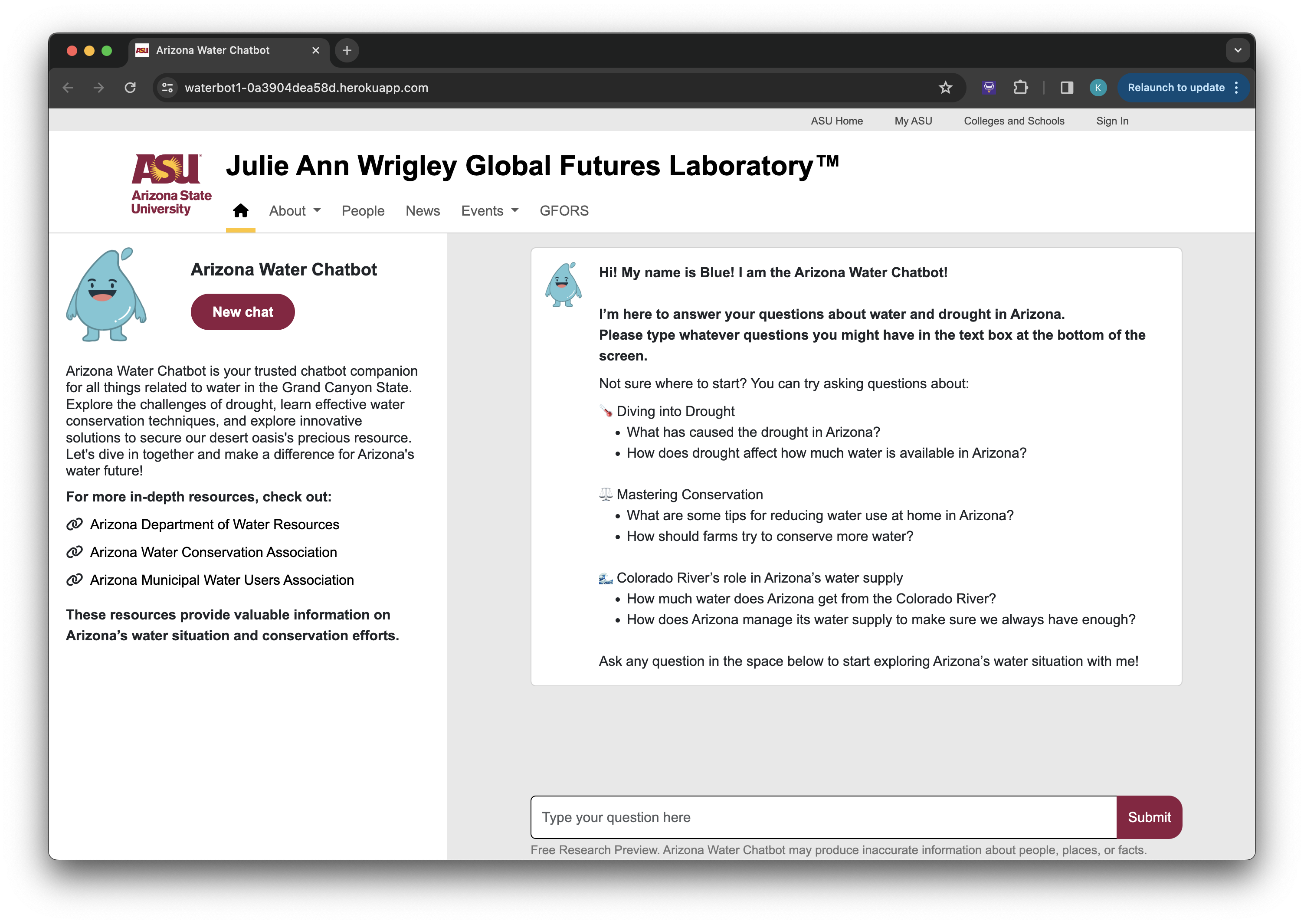
Waterbot is a brand new product that has received no feedback and has yet to be tested on users. This lack of data leaves room for bugs, usability issues, and poor user experience.
In order to make Waterbot a useful tool for Arizona residents to be able to use to learn and ask questions, we must observe how users interact with the chatbot. We need to determine what problems may prevent users from utilizing Waterbot and attempt to fix them.
I began with a heuristic evaluation of ChatGPT using Jakob Nielsen's 10 general principles for interaction design. This evaluation allowed me to better understand the mental model users likely have while interacting with Waterbot.
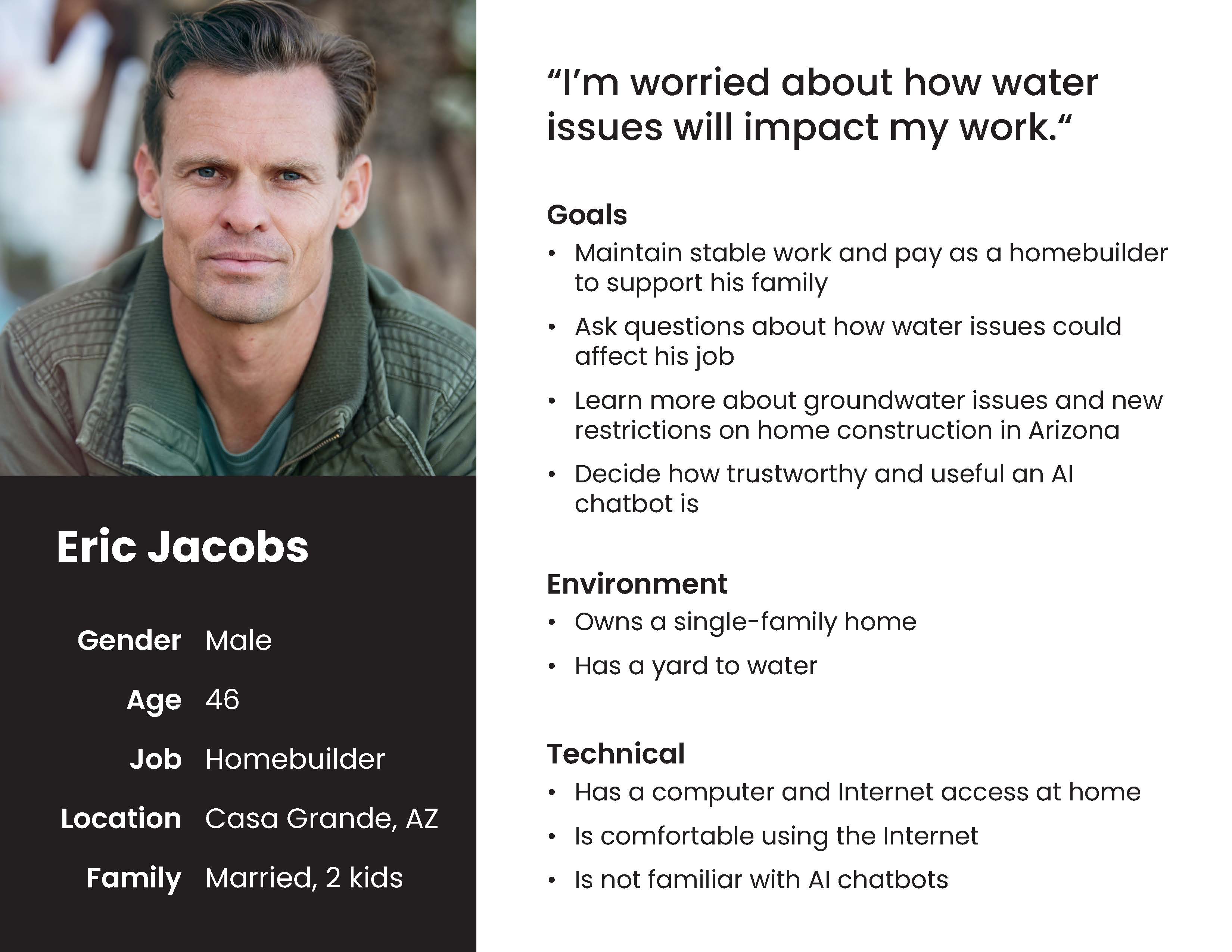
Then, I created a persona for an assigned potential user of the website. By researching and creating a persona, I was able to humanize the users and identify their goals and pain points relating to water issues and using AI.
As a class, we wrote a usability test script and protocol consisting of 3 tasks and 12 interview questions in preparation for user testing. These questions gathered data on the users’ water habits and knowledge, their opinions on the chatbot, and their overall experience using the website. I conducted three user tests using Zoom and documented my data and findings to analyze. The user tests allowed me to begin identifying issues the users had with Waterbot.
A group of other students and I compiled our user testing data in order to create a recommendation report. We made a list of issues with Waterbot that we found across our combined data and wrote a list of recommendations to combat the problems. We each used Figma to design a low-fidelity prototype incorporating some of our ideas based on our results. Our report included a thorough explanation of our process, data, recommendations, and prototypes.
Finally, my group and I showcased our findings in a presentation that highlighted the most important aspects of our report and displayed our solutions to improve Waterbot.

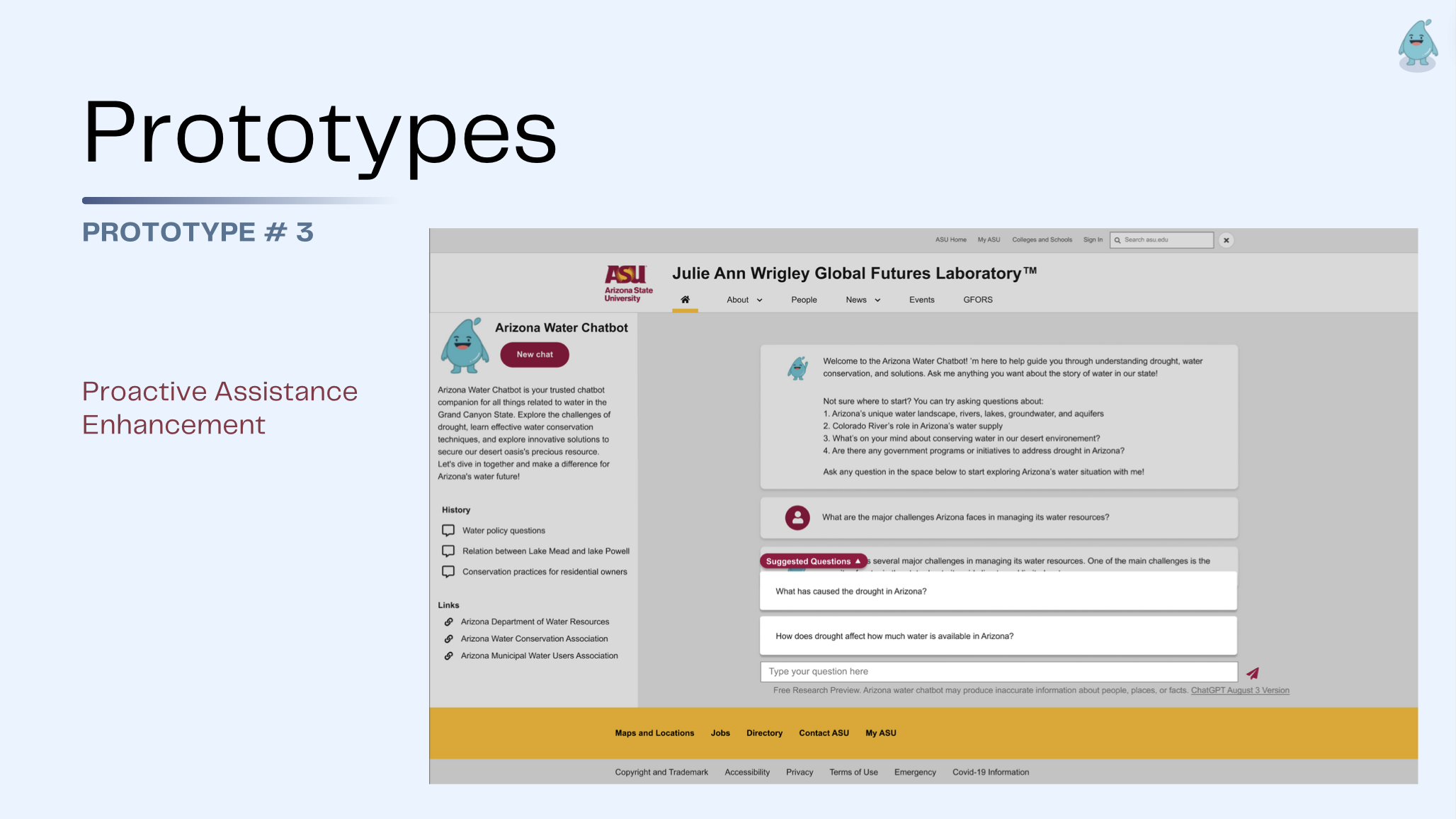
Based on our feedback from users, Waterbot has the potential to be a great resource to Arizona residents to learn more about water issues in their state. If our solutions were to be implemented, we predict that further user testing would show more positive feedback and fewer issues completing tasks. If we were to continue this project, our group would request the development team to apply our recommendations or use our prototypes to conduct another user test and compare our data to the initial test. This would allow us to determine the success of our solutions and help continue to improve Waterbot.